 |
|
|
|||||||||||||
|
|||||||||||||||
 |
|||||||||||||||


 |
||||||||||||||||||||||||||||||||||
|
|
|
|
|
|
|
|
|||||||||||||||||||||||||||
|
During my research I stumbled on an amazing fact. Bessler had left full instructions for building his machine, but written in code. The code is hidden in at least two of his publications and there are additional clues in others. Examples of the code are numerous and there is no doubt whatsoever that it exists, but so far it has defied decipherment The first item of code is obvious, as it has been discussed many times in various narratives of the legend of Bessler's wheel, although no reason for its existence has ever been offered before. He used the pseudonym "orffyreus" in place of his real name, "bessler". This was achieved by a simple substitution of the letters of his name, and is commonly known as the "atbash" cipher, well known in Biblical scholarship. He placed the second half of the alphabet beneath the first half, and substituted the letters above for those below and vice versa.
You can see that B for Bessler is represented by O for Orffyreus and E for R and so on. Once I had hit on the possibility that there might be a code, I looked for further evidence of its existence and this is what I found. |
||||||||||||||||||||||||||||||||||
 |
||||||||||||||||||||||||||||||||||
|
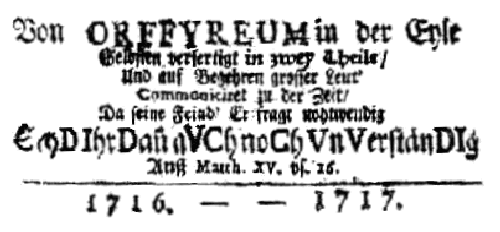
The whole publication is written in gothic script, as is still the case in some of Germany's printing. But Bessler did a most extraordinary thing with the font used in the above two quotations. He used Roman Capitals whenever a letter in the quotation could stand for a Roman Numeral. For example in the words Roman Numeral he might have substituted the letter m for an M, and the letter l for an L. It looks very odd even to today's unfamiliar eye. I added up all the "roMan nuMeraLs" thus exposed and discovered that the total was 1717, the year that the publication was published according to the front page. In the illustration adjacent, which is taken from the bottom of the title page of his autobiography, the following Roman Numerals can be extracted from the gothic script (in the large text on the second from bottom line of text):- D.I.D.V.C.C.V.V.D.I. - Since D=500, I=1, V=5, C=100, the sum therefore = 1717, the year of publication of the work. The words say "..and do ye still not understand", which is taken from Matthew 15, verse 16. Why did he do this? Coupled with the atbash clue of his pseudonym and the odd hint here and there throughout his autobiography, the aim was to point the reader in the desired direction, making him ask questions. But the clues could not be too obvious otherwise the secret might be revealed prematurely. For instance, prior to a passage of free verse is the advice, "Those who are keen to ask questions, should ask them of this little book. My work will not be revealed prematurely. Should anyone wish to speculate on the truth, let him now ponder on the rich pageantry of words which I now cause to shower down upon him!" This particular passage describes the wheel's construction in metaphors. Copyright © 2006 John Collins. |
||||||||||||||||||||||||||||||||||